Welcome to the latest edition of the Amadea Resort & Villas newsletter, with stories and news from our corner of Seminyak. Whether you stayed with us last season or many years ago, we hope these pages bring back a little of the island. This month, we explore the workshops near Jalan Kayu Aya where you can blend your own perfume, shape silver jewellery or roll fresh pasta. We also share how Amadea Cares and Yayasan Senyum helped a seven-month-old baby receive cleft lip surgery. Then we slow down with Balinese Bliss at Ambiente Spa and look back on Amadea’s temple anniversary ceremony, held under the September full moon.
Beyond the resort, we introduce Tumpek Landep, the sacred day when Bali gives thanks for knowledge and the tools of everyday life. We also head off-road on an ATV ride through jungle, rice fields and plenty of mud. If someone you know is planning a trip to Bali, please share this newsletter with them. We would love to welcome them to Amadea, and to see you back here soon.
Happy reading and see you soon in Bali
The Amadea Resort & Villas Team
Made in Bali, by You
From perfume to pottery, the workshops in and around Seminyak that let you take part in island life.
Ask travellers what they brought home from their last trip, and more of them now name something they learned rather than something they bought. A holiday has become a chance to pick up a skill, spend time with the people who practise it every day, and understand a place through their hands as well as your own. Seminyak makes that easy: within a short ride of Jalan Kayu Aya, a handful of studios and kitchens will teach you to make something and send you home with it.
Begin with scent. In Bali, incense belongs to the rhythm of the day: from early morning, thin threads of smoke rise beside the offerings at shopfronts and family shrines. At (farm)acy, inside Desa Potato Head on Jalan Petitenget, a half-hour workshop introduces the local ingredients behind that smoke and its traditional place alongside offerings, then lets you craft natural incense of your own. It opens a window onto a habit you have noticed since arriving, without pretending to be the ritual itself.
Indonesia has supplied the world’s perfumers for centuries, and L’Atelier Parfums & Créations, inside TS Suites on Jalan Nakula, puts those ingredients in front of you. Guided by French perfumery expertise, you learn how a fragrance is built, then compose your own. The three-hour session opens with some history of Indonesian ingredients; the ninety-minute version goes straight to blending. Either way, you leave with a scent nobody else is wearing.
Tucked down a lane at Jalan Plawa, Gang Melati No. 2, BK Creative Hub opened in June. Its ninety-minute flower-pressing session presses and arranges fresh island blooms, then transfers them onto a cotton tote, so no two bags come out alike. The studio also runs macramé and leather travel-journal sessions.
A silver jewellery class in Seminyak gives you the real tools of the trade. Over roughly two hours, a Balinese silversmith guides you through shaping, soldering, sanding and polishing 925 silver into a ring, a pendant or simple earrings. Couples often make matching rings. It is more physical than you might expect, and deeply satisfying when the shine comes up.
Clay asks for patience, and Mrs Potter Ceramic Studio in Pererenan, a short drive up the coast, has plenty of it. Classes welcome complete beginners and practised potters alike, and the studio doubles as a meeting point for the island’s artistic community, so the person at the next wheel may well call Bali home.
Finish where every good class should: at the table. Amici by Enrico Bartolini on Jalan Petitenget runs a pasta class in its own kitchen, led by head chef Alessandro D’Amico. You knead, roll and shape fresh pasta, then sit down together to eat it.
None of these asks for experience, only curiosity. Each places you beside someone who knows the craft by heart, then returns you to Amadea with something you made yourself and the story behind it.
Our concierge team will gladly share details on each workshop. Book online, or let them arrange it for you.
Little Gede's Big Day: Amadea Cares and Yayasan Senyum Bali Bring Hope to a Baby Born with Cleft Lip
Since 2005, Yayasan Senyum Bali, the Smile Foundation of Bali, has given children and adults with cleft lip, cleft palate and other craniofacial conditions access to free surgery and ongoing care across Bali and Eastern Indonesia. Through Amadea Cares, the resort supports this work directly and introduces guests to the foundation, so a stay at Amadea can become part of a child’s fresh start.
Seven-month-old Gede Satria from Klungkung has a new chapter ahead of him. On 25 September 2026, he had cleft lip surgery at Dharma Yadnya Hospital, supported by Amadea Cares and Yayasan Senyum.
Gede is the 27th patient helped through the partnership, and his procedure marks its 31st surgery. Each milestone shows how far this shared mission has come since it began.
His father Made, works as a driver, and his mother looks after the family at home. With the financial weight of the operation eased, the family could focus on what mattered most, their son. They have shared their heartfelt thanks to Amadea Cares and Yayasan Senyum for making it happen.
For both partners, every surgery means more than a medical procedure. It opens the way to a childhood with more confidence, more laughter and a brighter future, for the child and for everyone who loves him.
Together, we are making a difference, one smile at a time.
Balinese Bliss Massage at Ambiente Spa; The Real Thing, on Home Ground
Balinese massage now reaches far beyond the island, carried by Bali-trained therapists to spas around the world. At Ambiente Spa, Balinese Bliss lets you experience it where the tradition began.
All over the world, therapists from Bali are sharing the island’s massage traditions with guests who may never set foot here. The techniques have travelled well. Still, there is something about receiving them in Bali that the rest of the world can only borrow. That is why Balinese Bliss at Ambiente Spa deserves a place in your plans while you are here.
The ritual opens with a foot bath, a quiet signal that the rest of the day can wait. Next comes the traditional Balinese massage itself, with rhythmic strokes and gentle pressure working through tight muscles until the tension gives way. A body scrub follows, exfoliating the skin and leaving it smoother, softer and renewed.
Then the flower bath. Petals drift across the water, their fragrance filling the room, and for a while there is nothing to do but breathe and let the moment settle.
Balinese massage can be found in plenty of cities these days. Experiencing it on the island that shaped it, from a foot bath to a flower-strewn finish, is a different story altogether.
Reconnect with yourself. Refresh your senses. Discover the bliss of Bali at Ambiente Spa.
A Sacred Celebration of Balinese Heritage; Amadea's temple ceremony
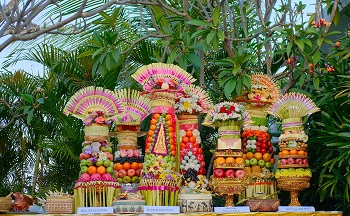
At Amadea Resort & Villas, the spirit of Bali lives on through its rich cultural heritage and timeless traditions. Each year, the resort celebrates its temple anniversary with a sacred purification ceremony, honouring the spiritual connection between the seen and unseen worlds and offering prayers for harmony, protection, and prosperity.
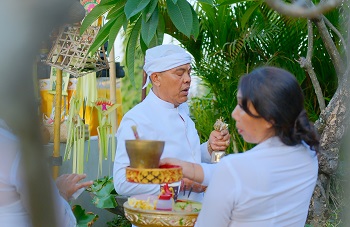
A Meaningful Day of Blessings on 26th September 2026, under the auspicious light of the full moon, the Amadea team gathered for this special occasion. Adorned with vibrant offerings and filled with an atmosphere of reverence, the ceremony was led by a local Hindu priest, who bestowed sacred blessings upon the temple and its surroundings.
In-house guests were warmly invited to witness this beautiful cultural tradition and join the Amadea team in prayer. It was a meaningful opportunity to experience the island's spiritual essence firsthand and share heartfelt wishes for peace, happiness, and prosperity.
The Philosophy of Living in Harmony: At the heart of Balinese Hinduism is Tri Hita Karana, an enduring philosophy that celebrates harmony between humanity, nature, and the Divine. This guiding principle is deeply woven into everyday Balinese life, inspiring a profound respect for ancestors, the natural environment, and the spiritual forces believed to sustain the universe.
While Bali continues to evolve as a world-renowned destination, its cultural identity remains deeply rooted in these sacred traditions. They are what give the island its distinctive soul, creating a sense of place that extends far beyond its beautiful landscapes.
More Than a Ceremony, A Celebration of Bali: For Amadea Resort & Villas, the annual temple anniversary is more than a religious observance. It is a heartfelt expression of gratitude, a renewal of spiritual bonds, and a celebration of the cultural heritage that makes Bali so extraordinary.
At Amadea, every tradition tells a story, every prayer carries a hope, and every blessing celebrates the harmony that makes Bali truly special.
Bali's Cultural Calendar - Tumpek Landep
When Bali Gives Thanks for Its Tools
Tumpek Landep: the sacred day when Balinese Hindus honour knowledge, wisdom and the tools that carry everyday life.
If you spot a car or motorbike adorned with offerings on Saturday, 14 November 2026, you are seeing Tumpek Landep. This sacred day in the Balinese Hindu calendar is a moment of gratitude for the blessings of knowledge, wisdom and the tools that support everyday life.
It returns every 210 days, on Saniscara Kliwon Wuku Landep. That is the day when Saturday (Saniscara) meets Kliwon, the last day of Bali’s five-day week, in the week (wuku) named Landep. It reflects the island’s enduring spiritual traditions and a deep connection between humanity, technology and the Divine.
More Than Metal
In Balinese, landep means “sharp” or “pointed”. Traditionally, the day honours sacred metal objects, including daggers known as keris and other heirlooms. Over time, it has grown to include modern tools and machinery, such as cars, motorcycles and the equipment that makes daily life easier. During the ceremony, these objects receive offerings and prayers. People give thanks for their usefulness and ask for blessings, safety and guidance in their use. Yet the ritual is never only about the objects. It is an act of devotion to the Divine, recognising the knowledge and ingenuity that make such tools possible.
A Sharper Mind
Beyond the offerings, its heart lies in the symbolic sharpening of the mind. It is a day for reflection, encouraging clear thinking, sound judgement, wisdom and a strong sense of responsibility.The observance honours Ida Sang Hyang Widhi Wasa, the Supreme God, in the manifestation of Sang Hyang Siwa Pasupati, associated with spiritual power and the blessing of knowledge. Through prayers and offerings, devotees ask for guidance to use their abilities, and the tools at hand, wisely and for the good of others.
Everyday Faith
Tumpek Landep shows how Balinese Hinduism weaves spirituality into daily life. It reminds us that progress and modern technology mean most when guided by wisdom, gratitude and respect for the world around us. As Bali embraces modern life while preserving its heritage, this sacred day carries a timeless message: true sharpness is found not only in metal, but in the clarity of our thoughts, the kindness of our hearts and the wisdom of our actions.
Activity of the Month: The Popular Bali from the Muddy Side
Trade the sun lounger for an ATV trail through jungle, rice fields and village paths
Most people meet Bali through its beaches and resorts. Climb onto an ATV and you meet another island, the one you only reach with mud on your shins and a grin you can’t shake.
Off the Main Road
The route refuses to sit still. One minute you’re deep in thick tropical jungle, the next you’re edging past rice fields so green they look freshly painted. Then the ground turns to mud, a stream cuts across the track, and you’re rolling along a rustic village path.
The trail twists, climbs and drops without much warning. The terrain turns rough, the puddles get deeper, and the first proper splash usually settles any nerves you started with. Each bend asks something new of you, so the ride holds the attention of thrill-seekers and nature lovers alike.
It suits almost any trip. Friends, families and couples all come away with the same thing: a shared adventure and a story worth retelling long after the holiday ends.
Whether you want an adrenaline rush or simply something different from another day by the pool, it’s an easy escape into nature.
So bring clothes you don’t mind ruining, and go find the wilder, muddier side of Bali.
Please contact our Guest Service Assistance to make the necessary booking arrangements for ATV experience with your preferred operator.
What the Guests Said
1. Mrs. Chandler (Australia) October 2026 : our room was clean and very comfortable. The housekeeping staff did an excellent job each day.
2. Mrs. O'brien (Australia) October 2026 : the staffs were friendly and helpful at every turn. We were always acknowledge with a smile and polite staff have been absolutely delightful. The food has been lovely and of a very high standard. The variation in breakfast choices was great.
3. Mr. Keen (Australia) October 2026 : breakfast is always delicious with lots of options it is a great benefit of the stay. Pool bar food and staff always great




.jpg)


.jpg)
.jpg)


.jpg)

.jpg)











 +62 361 847 8155
 +62 361 847 8157
  info@arvs.pphotels.com